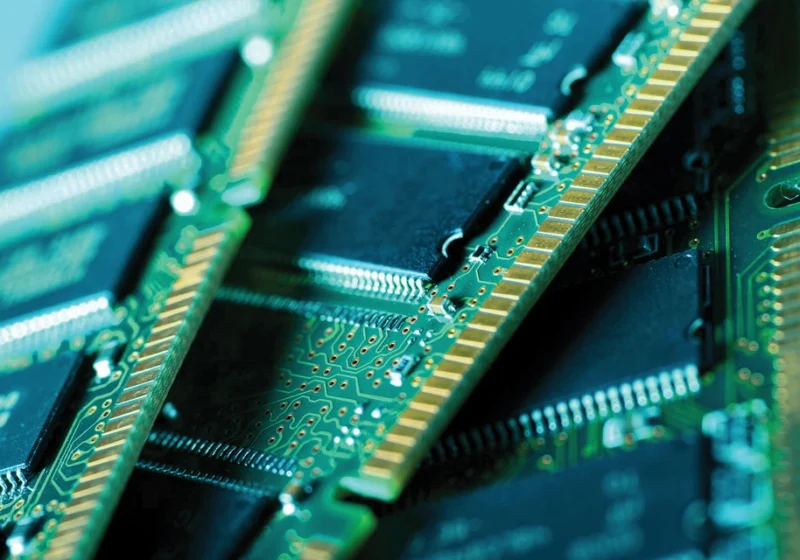
For years, DDR4 has been the undisputed standard for enterprise server memory. Reliable, affordable, and widely supported across virtually every major platform, DDR4 gave IT teams a stable foundation to build on. But the memory landscape is changing fast — and DDR5 is no longer a distant next-generation spec. It's here, it's shipping in production hardware, and your next server refresh cycle is likely to center on it.
Why DDR5 Now?
DDR5 offers a significant leap in performance compared to its predecessor. Starting at 4800 MT/s (megatransfers per second) — compared to DDR4's typical 3200 MT/s — DDR5 delivers higher bandwidth that benefits workloads involving large datasets, virtualization, and in-memory databases. Beyond raw speed, DDR5 introduces on-die ECC (Error Correcting Code), which moves some error correction to the DRAM chip itself rather than relying solely on the memory controller. This reduces error rates and improves data integrity in critical enterprise environments.
The platform shift is being driven by Intel's 12th generation (Alder Lake) and 13th generation (Raptor Lake) processors and AMD's Zen 4-based EPYC server CPUs, all of which support DDR5 natively. As these platforms proliferate in enterprise data centers, DDR5 adoption is becoming less of a choice and more of a natural consequence of hardware refresh cycles.
What Happens to DDR4?
DDR4 will not disappear overnight. Many existing enterprise platforms — including Intel Xeon Ice Lake and Cascade Lake, AMD EPYC Naples and Rome, and numerous Dell PowerEdge, HPE ProLiant, and Cisco UCS systems — are locked to DDR4. These platforms will remain in production use for years, and DDR4 memory will continue to be manufactured, bought, and sold in large quantities. For organizations running these systems, DDR4 remains a cost-effective, fully supported option.
The challenge arises for IT teams managing mixed-generation fleets or planning capacity expansions. Organizations that purchase new servers with DDR5-compatible platforms must keep DDR4 inventory separate, manage two memory pools, and plan more carefully around compatibility. For procurement teams and MSPs managing many client environments, this complexity is a real operational consideration.
Key Considerations for Enterprise Memory Strategy
When planning a memory upgrade strategy in the context of the DDR4-to-DDR5 transition, enterprise IT teams should evaluate several factors. First, assess your current platform landscape — understanding which of your servers support DDR4 only, and which are DDR5-capable, is the essential starting point. Second, consider your refresh timeline: if you plan to refresh servers within the next 12–18 months, it may be worth targeting DDR5 platforms directly rather than investing heavily in DDR4 capacity expansion.
Budget is another critical variable. DDR5 modules carry a premium over DDR4, particularly at higher capacities. However, this gap is narrowing as production volumes scale. Organizations with flexible procurement timelines can benefit from monitoring market pricing and acting when DDR5 density-per-dollar reaches parity with DDR4 for their use cases.
The Neonix Perspective
At Neonix, we stock both DDR4 and DDR5 server memory across all major form factors and capacities, including our own Neonix-brand memory modules that are rigorously tested for compatibility with leading server platforms. Whether your infrastructure requires DDR4 for existing systems or DDR5 for next-generation deployments, our team can help you source the right modules at the right price.